Sagnheimar Folk Museum
Sagnheimar, the Folk and Natural History Museum, is one of the oldest local museums in Iceland.
The museum traces its origins back to the founding of the Vestmannaeyjar Folk Museum in 1932. For its first decades, the museum lacked permanent premises, and its collection was housed in various places around Vestmannaeyjar and for a time at the National Museum of Iceland during the 1973 eruption of Heimaey. A major milestone was reached in 1978 when the museum moved into the newly built Culture House, which it shares with the town library.
Since then, the exhibitions have undergone a number of changes. The biggest transformation took place in 2010–2011, when the museum was redesigned and reopened on July 2, 2011, under the name Sagnheimar, Folk Museum. The new museum emphasizes multimedia and informative texts, with significantly fewer objects on display. About half of the exhibition area is dedicated to a harbor scene focusing on fishing, fish processing, a baiting shed, and workers’ quarters.
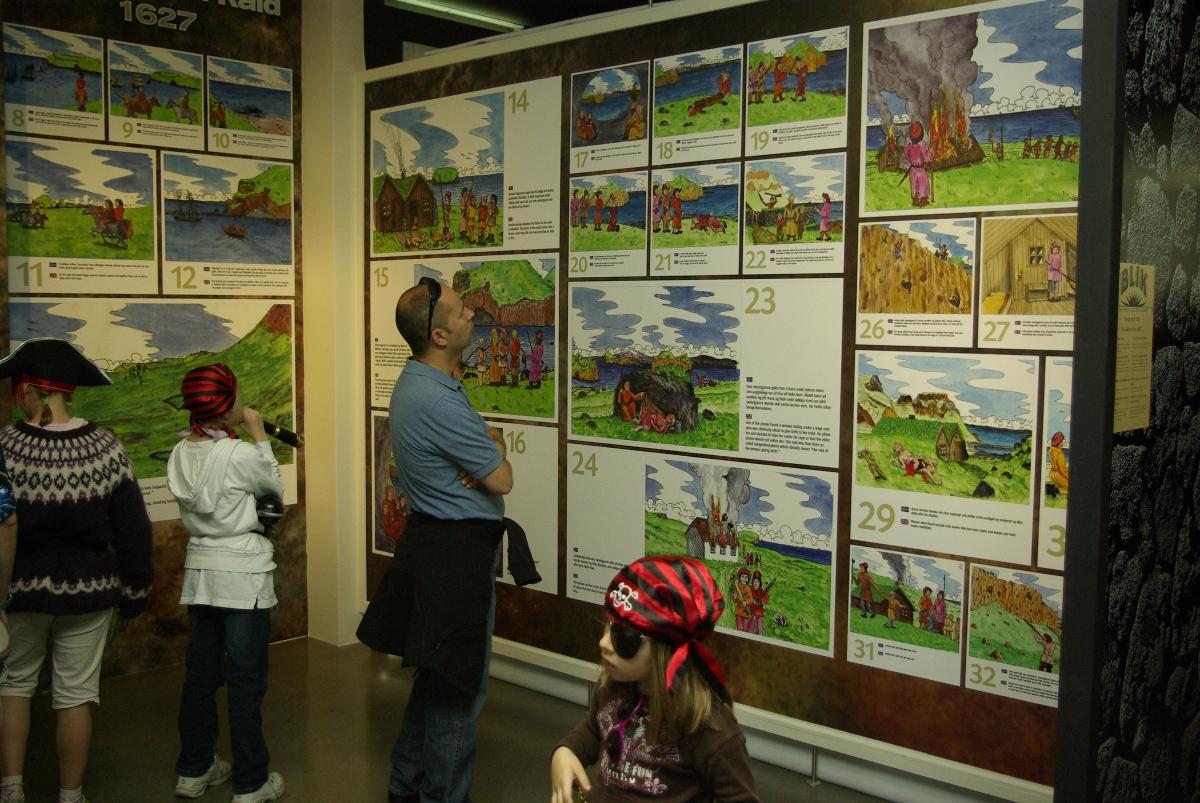
Other permanent exhibitions cover topics such as the Þjóðhátíð festival, the Turkish Abductions, Icelandic Mormons in Utah, women’s lives, Captain Kohl and the local militia, and the Heimaey eruption. One of the museum’s innovations is “a peek into the storage,” where objects from the collection are regularly displayed in small, rotating exhibits.
The museum also has excellent facilities for film screenings and lectures, accommodating up to 130 people and room for art exhibtions. For children, there is a pirate cave with costumes and a treasure chest, a tactile collection, and a turf house play area. The museum aims to appeal to all age groups with its combination of education and entertainment.